
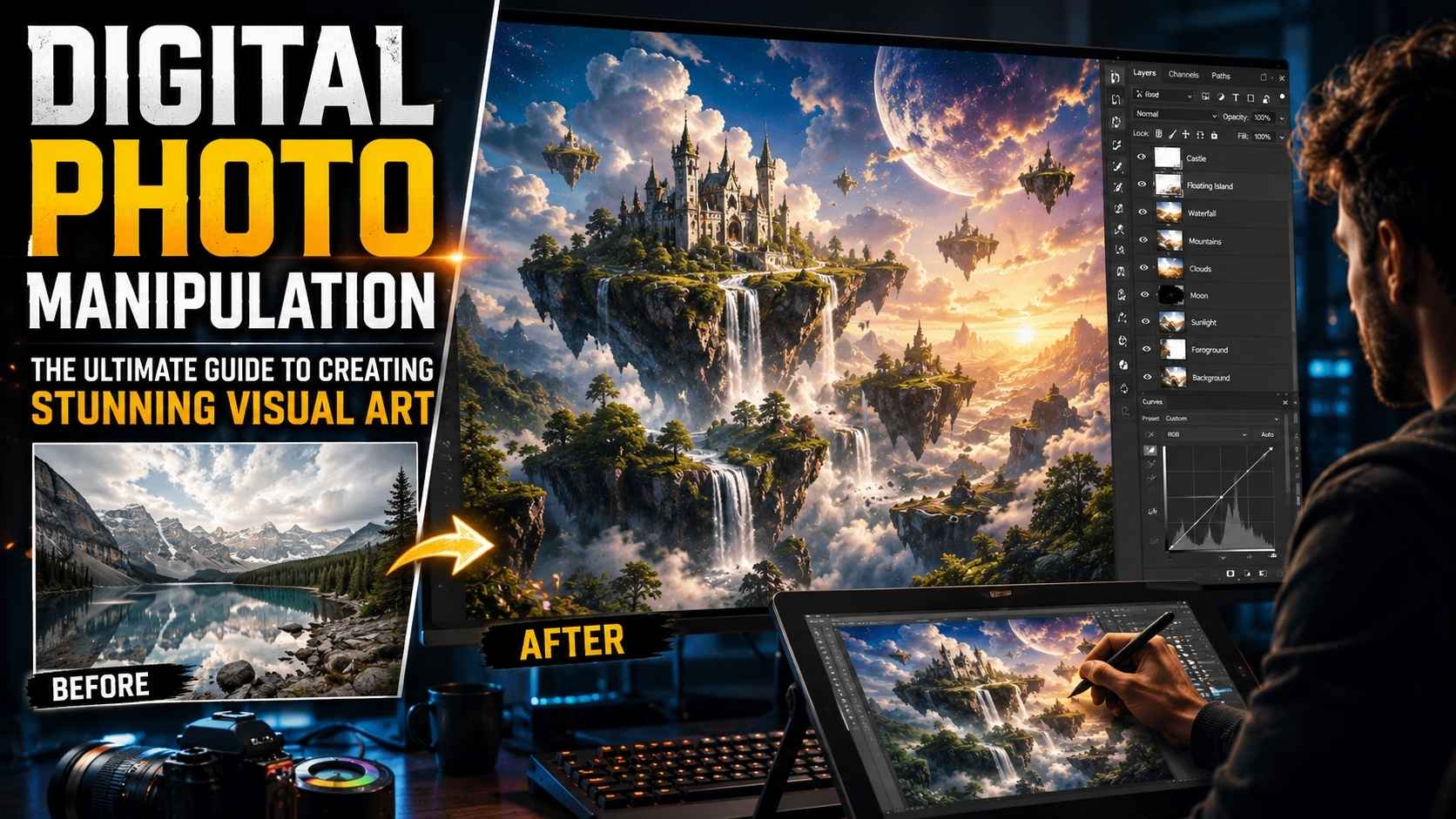
Photos have become one of the most effective means of communication in the age of digital technology. From ad campaigns, posters of movies, and social media graphics to portfolios of artists, images make a much stronger impression on people than words. Photo manipulation techniques provide the tools for creating amazing artworks based on plain photos.
A manipulated image represents an image, which is the result of some manipulations and transformations rather than just a simple photo, which is processed in some way. No matter if you are a photographer, graphic designer, marketer, or digital artist, knowledge of photo manipulation techniques is helpful for you to create your own visual content.
This guide provides information about what manipulation in photography is, how it works, professional techniques and tips for creating high-quality manipulation artworks.
What Is Digital Photo Manipulation?
Manipulation of digital photographs refers to the technique that involves altering or combining photographs through the use of software to come up with a new photograph. While simple editing entails changing the lighting and coloring of an image, manipulation may alter the structure, setting, objects, and mood of a picture to realize an intended artistic view.
The final manipulation may entail sky replacement, addition of imaginary components, combination of several pictures or creation of imaginary landscapes. Due to its flexibility, manipulation of photographs is common in various sectors such as entertainment, advertising, fashion and fine arts.
Why Digital Photo Manipulation Is So Popular
Unlimited Creative Possibilities
Amongst the main benefits of manipulating photos digitally is the fact that it opens doors for the artist to create imaginary worlds and concepts. It allows one to think of an idea and to design the scenery for this idea regardless of the lack of a suitable location in real life.
Stronger Visual Storytelling
An image that has been manipulated is capable of conveying emotions, ideas, and stories in ways that ordinary photography is not able to convey. It is possible for an artist to manipulate an image such that the viewer is led through a visual narrative in a way that is captivating.
Cost-Effective Content Creation
Building complex scenes through the use of photography alone may necessitate costly locations, props, and crews. Photo manipulation in photography allows for many of these things to be added using computer software, resulting in the same professionally made look without spending much time or money. This is how companies create their marketing images.
Difference Between Photo Editing and Photo Manipulation
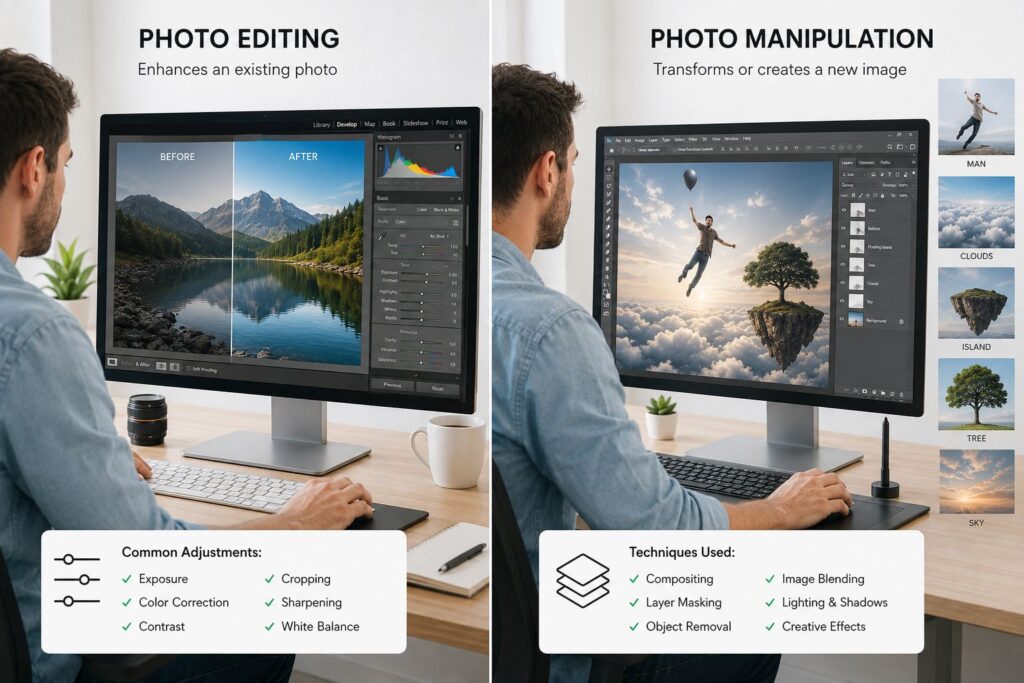
However, despite their similar usage, they mean different things.
Basic photo editing means enhancing an already existing picture by doing modifications like fixing the exposure, color correction, cropping or sharpening. Digital manipulation means that something is changed in the picture or even created anew based on several pictures.
For instance, when one modifies the level of brightness, it is called editing, but when someone puts a man in the air above clouds, this is manipulation of the photo image.
Common Types of Manipulation Artwork
Surreal Compositions
Surreal photo manipulations combine unexpected elements to create dreamlike visuals that challenge reality. Floating buildings, giant animals, or impossible landscapes are common examples that encourage viewers to think beyond the ordinary.
Fantasy Art
Fantasy manipulation blends photography with imagination by introducing mythical creatures, magical environments, or cinematic effects. These projects are popular for book covers, gaming artwork, and creative portfolios because they showcase artistic vision and technical skill.
Commercial Advertising
Imagery is often altered in order for brands to make their products look appealing to consumers in such a way as would be hard or costly to capture using an actual camera. Such images help companies convey their messages effectively and professionally.
Essential Techniques Used in Photograph Manipulation
Layer Masking
The layer mask technique enables the editor to show or conceal parts of an image without destroying the image pixels. Layer masks can be helpful in making adjustments on images, especially when joining two or more photos.
Compositing
Compositing refers to the combining of several images into one cohesive picture. This can be done effectively by ensuring that there is an alignment of perspective, lighting, shadow, and color tones.
Color Grading
Color correction allows manipulated pictures to have the same mood and ambiance. By having the same tones on each layer, different photographs can be made to appear as if they were taken in the same way.
Shadow and Light Adjustment
Realistic shadows and highlights are essential for believable manipulation. Even an excellent composite can appear artificial if objects do not interact with light in a consistent and logical way.
Step-by-Step Process for Creating a Manipulated Photo Image
Plan Your Concept
Every successful project starts with a clear idea. Defining the message, style, and mood before editing helps maintain consistency throughout the creative process and reduces unnecessary revisions.
Collect High-Quality Assets
The quality of source images significantly influences the final result. Using high-resolution photographs with compatible perspectives and lighting provides a stronger foundation for professional editing.
Build the Composition
Arrange subjects, backgrounds, and supporting elements into a balanced layout. During this stage, creators often experiment with positioning until the visual story feels cohesive and natural.
Refine the Details
Fine adjustments such as masking, edge cleanup, shadow creation, and color matching transform a rough composite into polished manipulation artwork. Paying attention to these details often separates amateur work from professional results.
Industries That Benefit from Photography Manipulation
Marketing and Advertising
Advertising agencies use manipulated visuals to create memorable campaigns that capture audience attention. Creative imagery often performs better than ordinary photography because it evokes curiosity and emotion.
E-commerce
Online retailers enhance product images by removing distractions, replacing backgrounds, or creating lifestyle scenes digitally. This approach helps present products more attractively while maintaining visual consistency across catalogs.
Entertainment
The film, gaming, and publishing industries rely heavily on photo manipulation to produce posters, promotional graphics, and conceptual artwork. These visuals help establish themes and generate excitement before release.
Social Media Content
Content creators and influencers use digital manipulation to produce unique images that stand out in crowded feeds. Creative compositions often encourage higher engagement, shares, and audience interaction.
Best Practices for High-Quality Results
Maintain Consistent Lighting
Every object within a manipulated image should appear illuminated by the same light source. Matching highlights and shadows creates realism and prevents elements from looking artificially inserted.
Match Perspective
Perspective consistency ensures that subjects appear proportional and naturally positioned within the scene. Even small perspective mismatches can reduce the credibility of an otherwise impressive composition.
Avoid Overediting
Adding excessive effects or unrealistic colors may distract viewers from the intended message. Subtle refinements often create stronger and more believable visuals than overly processed images.
Ethical Considerations
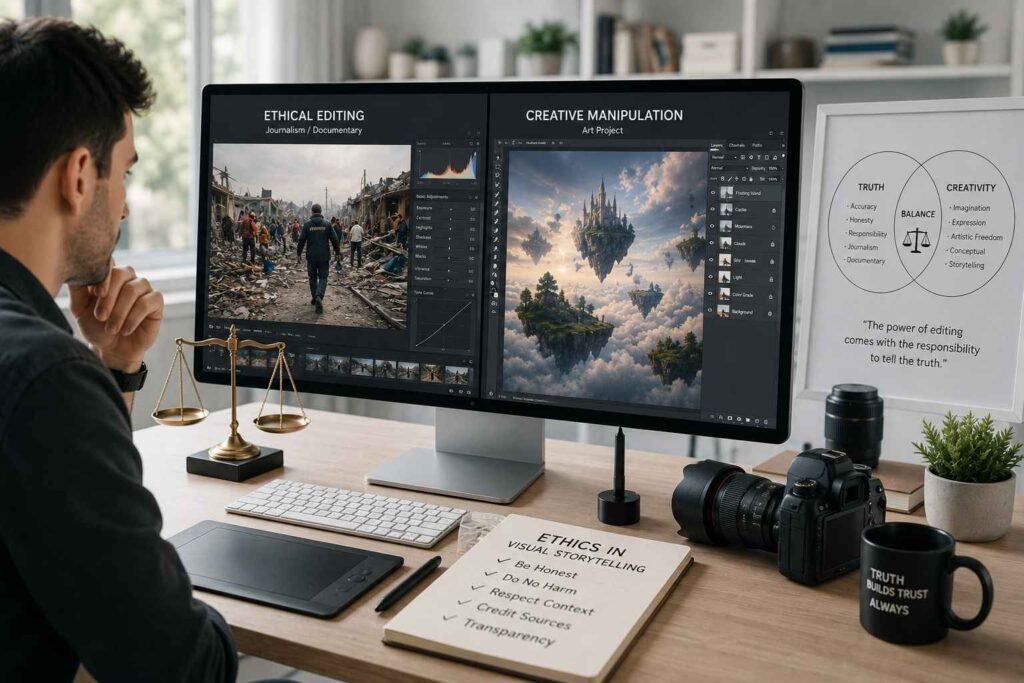
Photograph manipulation can be a very creative process; however, it must be used ethically. While art projects inspire creativity, journalism and documentary work demands honesty. The knowledge of the intent behind a photograph will help a creator make appropriate choices in terms of image editing.
The Future of Digital Manipulation Photo
Artificial intelligence and automation are changing how artists work by speeding up selections, background removal, and object generation. Despite these technological advances, creativity, storytelling, and design principles remain essential skills that software alone cannot replace.
As visual communication continues to evolve, professionals who master both traditional editing techniques and modern AI-assisted workflows will be well positioned to create compelling digital experiences.
Conclusion
Digital photo manipulation is the combination of skill and artistry to turn regular photos into a beautiful story through digital manipulation. The objective could be anything from advertisements, fantasy art, social media posts, or branding, but learning the digital manipulation photo skills can go a long way in terms of creativity.
With knowledge on lighting, compositing, color grading, and responsible manipulation practices, one can create beautiful digital manipulation photos or photo manipulation projects that speak volumes to the audience. With practice and diligence, digital photo manipulation becomes an essential tool for all those engaged in visual media creation.
Leave a Reply